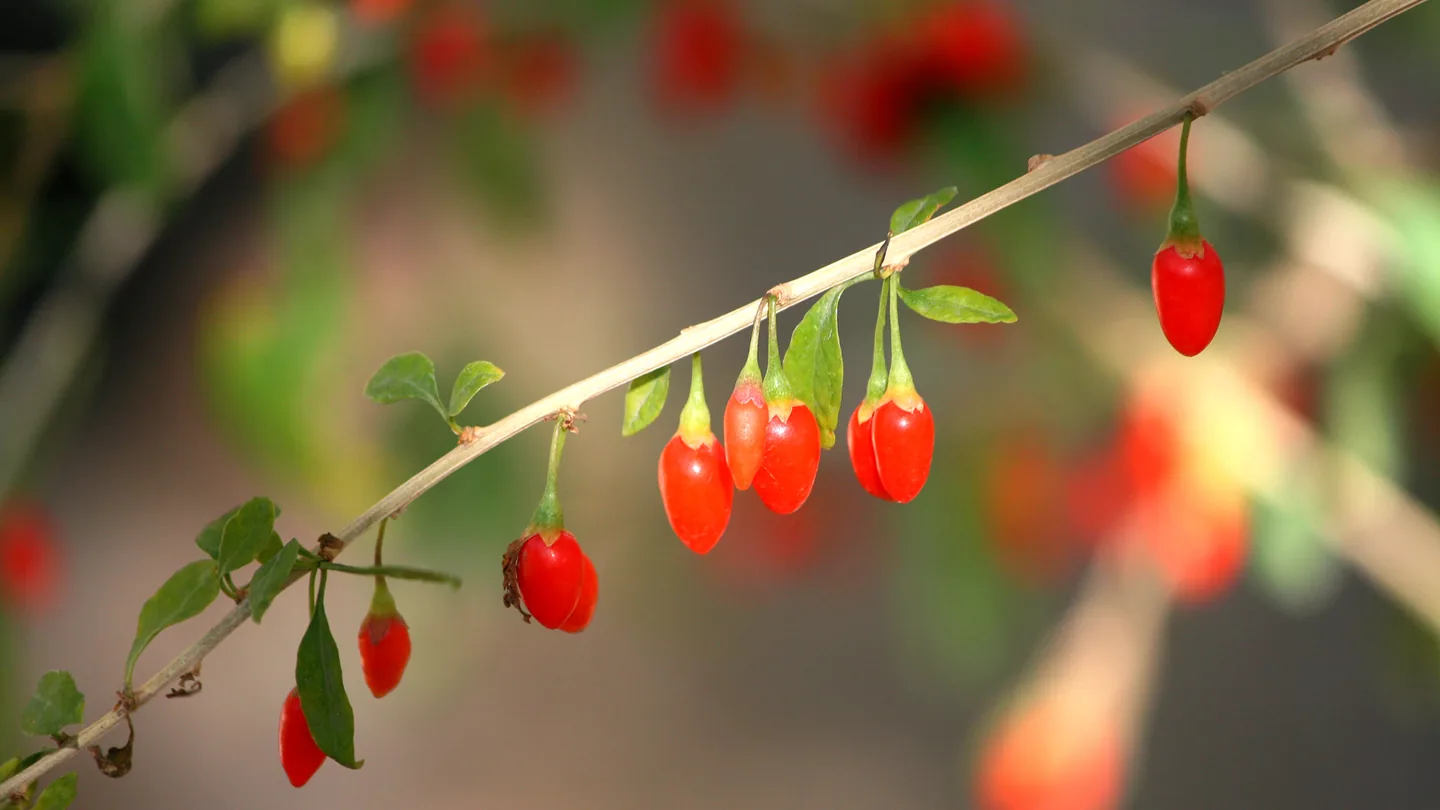
A berry from the family soup pot
Goji, or gou qi zi, also called wolfberry, is the small red berry of Lycium barbarum. In Chinese households it drifts through herbal soups, congee and sweet teas, and in traditional wellness language it is closely associated with nourishing the eyes and supporting healthy aging. It became a Western "superfood" in the early 2000s, often sold dried, as juice or in capsules.
That long kitchen history is worth honouring. It also deserves a careful modern reading, especially because of one important interaction.
What makes goji interesting to scientists
Goji berries are rich in zeaxanthin, a yellow-orange plant pigment. Zeaxanthin and its cousin lutein concentrate in the macula, the central part of the retina responsible for sharp, detailed vision. That gives the traditional "good for the eyes" idea a plausible biological link worth studying.
What the research says
The best-known human trial, published in Optometry and Vision Science, gave older adults either a daily goji berry milk-based formulation or a placebo for 90 days. In the goji group, blood levels of zeaxanthin rose by about 26 percent and antioxidant capacity by about 57 percent. Researchers also examined the macula: the placebo group showed small unfavourable changes in pigmentation and deposits, while the goji group remained stable. No product-related side effects were reported.1
The authors themselves noted that the mechanism was unclear, because the rise in blood zeaxanthin did not track with the changes in the eye. It was one study, in one group of older adults, using one specific product, and it measured signs in the eye, not vision or eye disease. It does not show that goji protects eyesight or prevents any eye condition.
A second, smaller pilot trial from the University of California, Davis, gave 27 healthy adults aged 45 to 65 either 28 grams of dried goji berries five times a week or a lutein and zeaxanthin supplement for 90 days. Macular pigment density, a measurement of those pigments in the eye, rose in the goji group but not in the supplement group. The study was unmasked, meaning participants knew which group they were in, and it measured a biomarker rather than vision.2
Strength of evidencelimited. Two small, encouraging trials measuring biomarkers. Interesting, not proven.
East meets West: everyday eye care
The habits with the strongest support for comfortable eyes in later life are simple:
- Regular eye checks. An eye examination every one to two years after 60, or as your optometrist or doctor advises, catches changes early.
- Sunglasses and a hat. Malaysia's strong sun makes UV protection a daily habit worth keeping.
- Colourful vegetables. Dark leafy greens such as spinach, kangkung and kailan, plus corn, eggs and orange or yellow fruit, provide lutein and zeaxanthin as part of a normal diet.
- Screen breaks. The 20-20-20 habit, looking at something about 20 feet away for 20 seconds every 20 minutes, eases screen fatigue.
- Good lighting at home. Brighter light for reading and cooking, and night lights on the way to the bathroom, also lower the risk of falls.
- Do not smoke. If you do, stopping is one of the best things you can do for your whole body, eyes included.
A spoonful of goji in the soup fits right into this picture as a food, alongside the greens.
Safety and interactions
- Warfarin. This is the most important point. A case report in Toxicology Reports describes a 65-year-old man on long-term warfarin who developed a raised INR and bleeding after drinking goji berry wine, and notes three earlier similar reports.3 A review in the Singapore Medical Journal lists goji among Chinese herbs that may interact with warfarin.4 If you take warfarin, talk to your doctor before eating large amounts of goji or using concentrated goji products, and keep INR checks as scheduled.
- Other medicines. Concentrated extracts may interact with medicines for blood pressure or blood sugar; ask your pharmacist.
- Allergies. Goji belongs to the nightshade family, alongside tomatoes and eggplant. People with related food allergies should be cautious.
- Quality. Dried berries can carry pesticide residues or added sulphites. Buy from reputable sellers and rinse before use.
- Pregnancy. Ask your doctor before using concentrated goji products.
Talk to your doctor or pharmacist before adding goji juice, capsules or large daily amounts, especially if you take warfarin or other blood thinners.
Food, tonic or supplement?
In traditional Chinese cooking, goji is a food first. A few berries simmered in soup for a family meal is a very different exposure from drinking a glass of concentrated juice every morning or swallowing extract capsules. The case reports of warfarin interactions involved larger, concentrated intakes, such as goji wine or tea made with many grams of berries.3 This is a useful principle for many botanicals on Open Leaf: the closer a product stays to its traditional food form and amount, the more its long history of use tells you about everyday tolerance. Once it becomes a concentrated extract, the old history says less, and modern safety data matter more.
How to enjoy goji sensibly
- As food: a small handful (about one tablespoon) of dried berries in soups, porridge, tea or oats.
- Rinse and soak dried berries briefly before use.
- Juice and capsules are much more concentrated and are where interaction concerns are greatest.
- Skip labels that promise to restore eyesight, reverse aging or treat disease.
The bottom line
Goji berries have a cherished place in Chinese home cooking and tradition, and two small early trials found encouraging changes in blood zeaxanthin and eye measurements. That is a long way from proof. Our grandmother can keep her goji soup as a delicious family ritual. Her grandson was right to check, though: with a blood thinner such as warfarin, a quick conversation with her doctor matters more than any berry.
East meets West · the research
Research from Asia
Studies published in Japanese, Korean, Malaysian, Chinese and TCM journals, read with the same care as our other sources. Some were published in Japanese, Korean, Chinese or Malay; we show the original title and an English translation, and summarise them in plain English. We note small samples, animal studies and company-run trials. These summaries describe what was studied; they are not promises of results for you.
- Japan
Kizawa Y, Sekikawa T, Kageyama M, et al. (2021). Effects of anthocyanin, astaxanthin, and lutein on eye functions: a randomized, double-blind, placebo-controlled study. Journal of Clinical Biochemistry and Nutrition (Japan).
In plain English: A 6-week randomized, placebo-controlled trial in 44 healthy Japanese adults with screen-related eye tiredness; a capsule with anthocyanin, astaxanthin and lutein (not goji) helped preserve focusing response after screen work and improved some self-rated eye comfort items. Small, and run by the supplement company's own researchers.
- China · TCM
Chen J. (2023). Essential role of medicine and food homology in health and wellness. Chinese Herbal Medicines (China).
In plain English: An editorial from China's National Center for Food Safety Risk Assessment explaining "medicine and food homology", the TCM idea that some herbs are also everyday foods, and China's official list of such substances. A viewpoint piece, not a trial.
Each record was checked against PubMed, J-STAGE, KoreaScience or the DOI registry on 14–15 November 2026. Translations are Open Leaf’s own; please check the original for exact wording. Not medical advice.
References
Every source below was checked against PubMed or the publisher’s page on 14 November 2026. Inclusion is not an endorsement of any product.
- Bucheli P, Vidal K, Shen L, et al. Goji berry effects on macular characteristics and plasma antioxidant levels. Optom Vis Sci. 2011. PubMed ↗ · DOI 10.1097/OPX.0b013e318205a18f
- Li X, Holt RR, Keen CL, et al. Goji Berry Intake Increases Macular Pigment Optical Density in Healthy Adults: A Randomized Pilot Trial. Nutrients. 2021. PubMed ↗ · DOI 10.3390/nu13124409
- Zhang J, Tian L, Xie B. Bleeding due to a probable interaction between warfarin and Gouqizi (Lycium Barbarum L.). Toxicol Rep. 2015. PubMed ↗ · DOI 10.1016/j.toxrep.2015.08.011
- Chua YT, Ang XL, Zhong XM, et al. Interaction between warfarin and Chinese herbal medicines. Singapore Med J. 2015. PubMed ↗ · DOI 10.11622/smedj.2015004
Keep reading
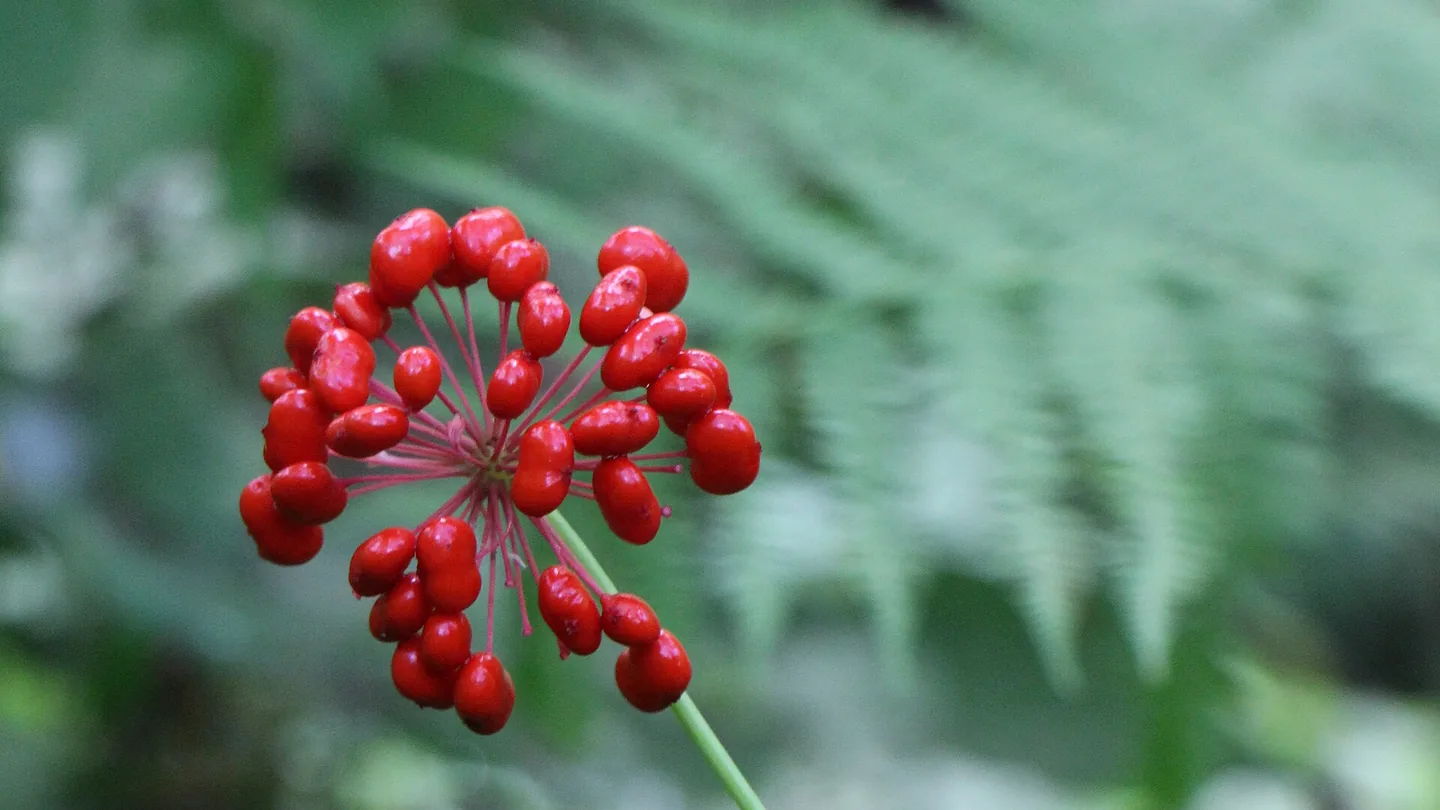
Asian ginseng and the demanding workday: an East-meets-West look
Asian ginseng (Panax ginseng) in Korean and Chinese tradition, what modern trials show about calm and focus, warfarin interactions, and daily habits that matter more.
Read the guide
Graceful skin aging, East and West: sunscreen first, sleep second, collagen a distant third
What a randomized trial showed about daily sunscreen and skin aging, how sleep relates to skin barrier recovery, what collagen supplement meta-analyses really found, and East Asian skincare rituals.
Read the guide
Protein, creatine and tofu: the gym basics that actually have evidence
How much protein gym-goers need, why soy and tofu work as well as whey in trials, what creatine really does, and how to build an East-meets-West plate for strength training.
Read the guide